


The Realm at a Glance
- Territory
- Small. The islands of the Surmave delta, the southern and eastern lakeshore, and a thin strip of vineyards and villa country.
- Capital
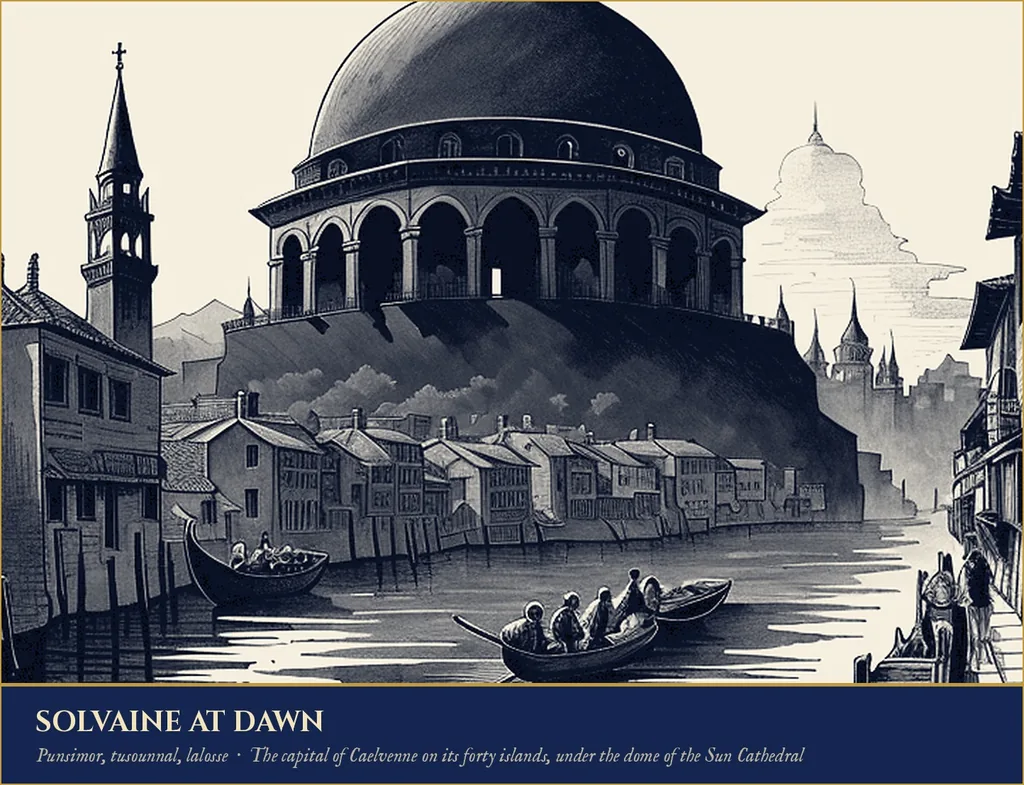
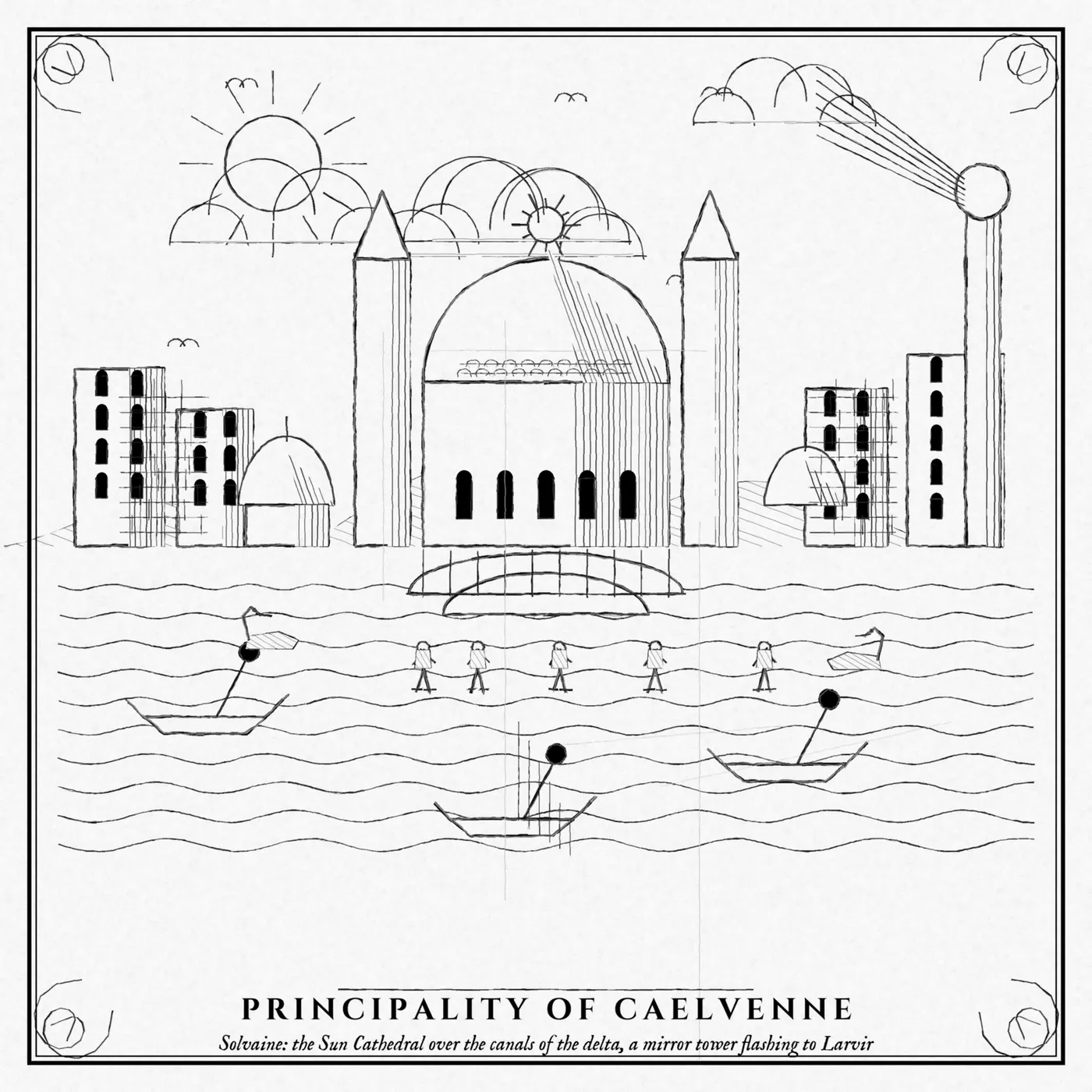
- Solvaine, a city of canals, bridges and gilded domes built across forty islands. At dawn the golden dome of the Sun Cathedral can be seen from across the lake.
- Other cities
- Claupiose, Ienvaune, Larvir.
- Government
- A principality in name. In truth it is ruled by the Conclave of Nine Houses, the great banking and merchant families, who choose the prince from among themselves.
- Ruler
- Prince Lourien diol Valcroix (61), a patron of the arts, a man of fine taste, and a very dangerous man at a dinner table.
- Key figures
- Bevele Bansine Farisel, head of the House of Farisel, which holds the debts of four of the seven great powers. Roltien Aijal, master of the Quiet Office, the best web of spies on the continent.
- Religion
- The Church of the Radiant Iévaine. Sun worship at its most lavish: cathedrals lined with mirrors and gold leaf, dawn processions, choirs, incense. The clergy come from the noble houses and live like princes.
- Economy
- Banking and lending, glassmaking, perfume, dyed silks, fine wine, art, jewelry, printing, clockwork. They grow almost no food and buy most of it from Aldmere.
- Military
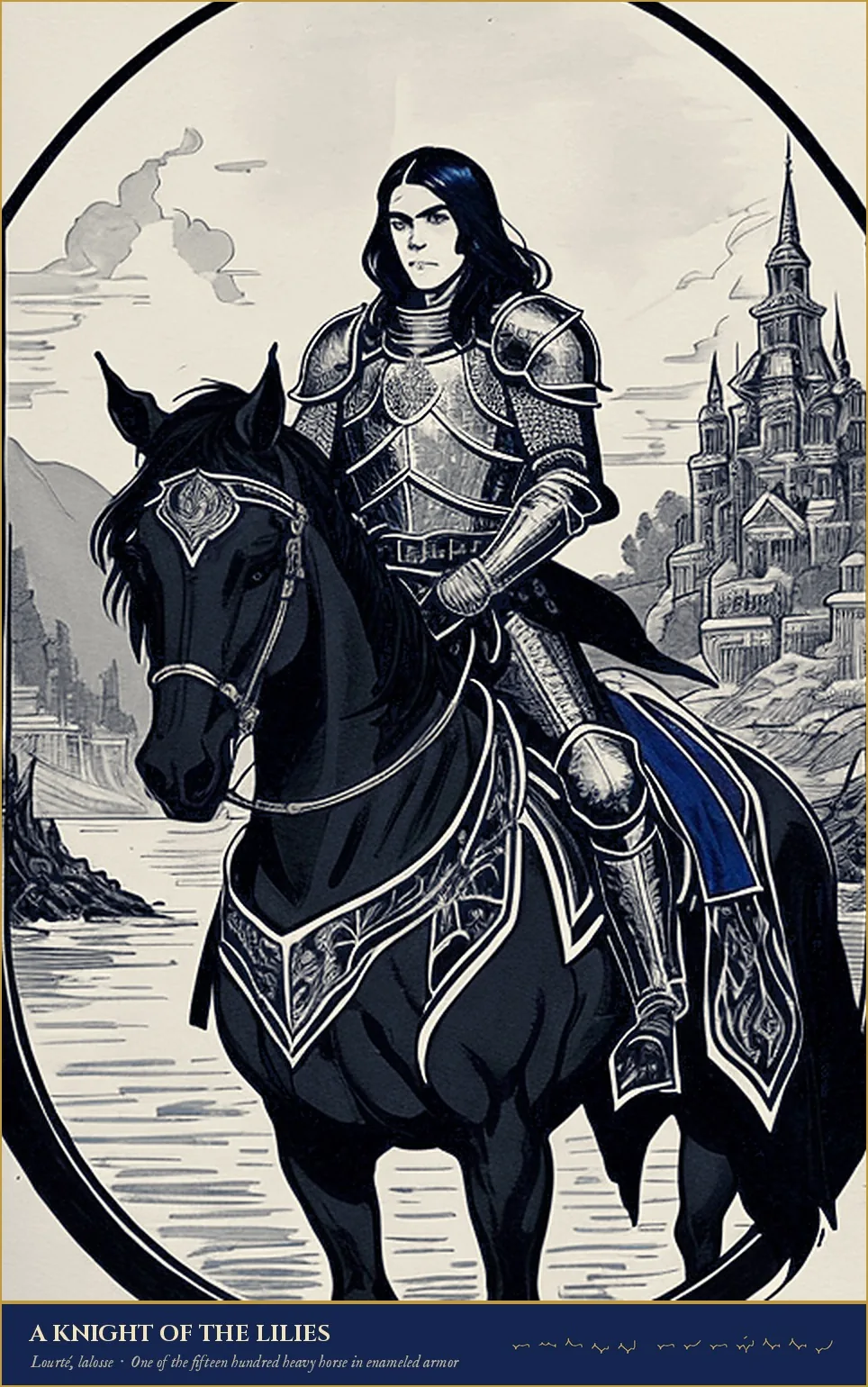
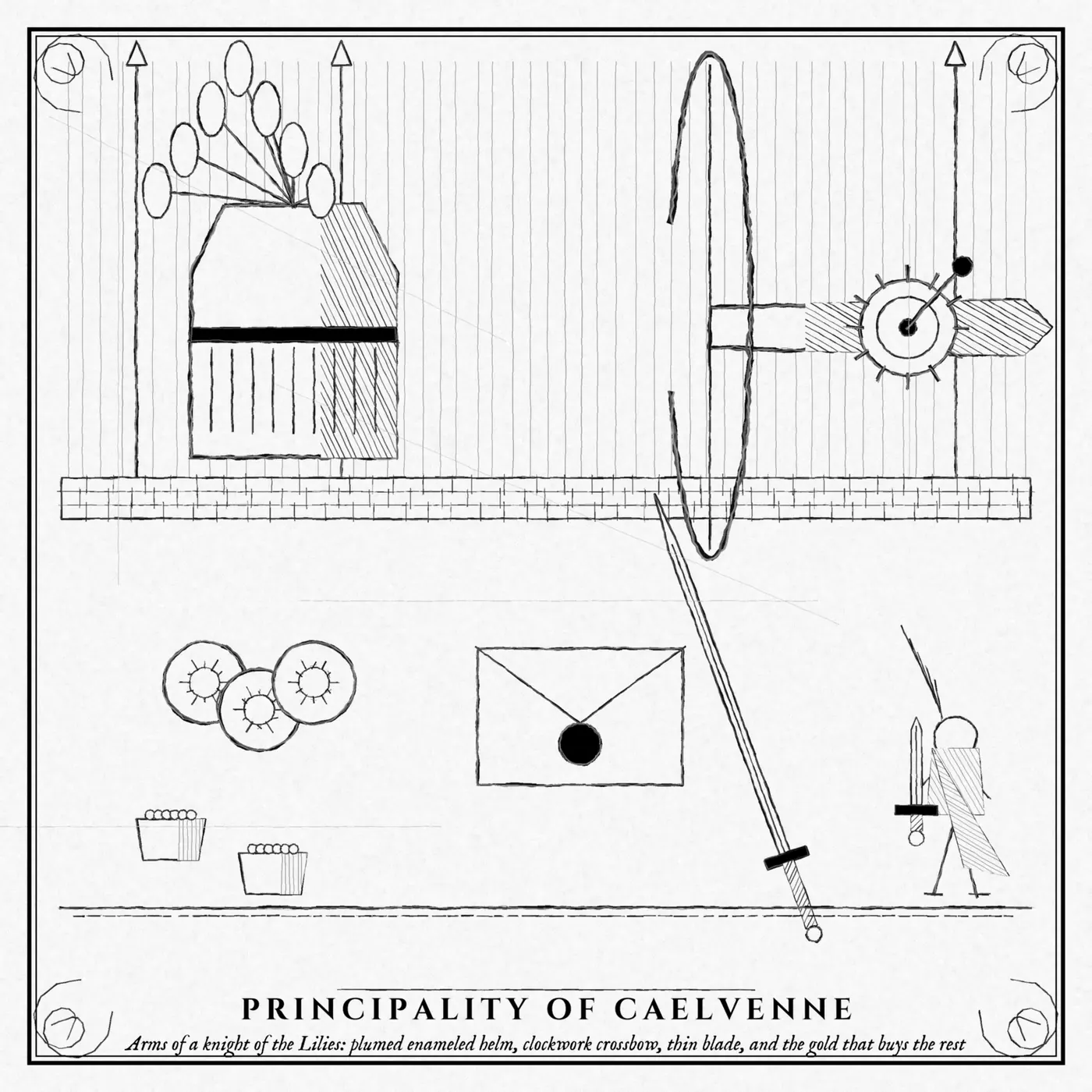
- A small picked order of knights, the Lilies (1,500 heavy horse in enameled armor); a strong lake navy of galleys; and gold. Mostly gold. They hire mercenaries, and above all they pay Tharax.
- Advanced technology
- Clockwork makers who build mechanical crossbows and self-winding siege engines; a chain of mirror towers (heliographs) that can pass a message across the lake in an hour.
- Architecture
- Marble, canals, domes, arcades, bell towers, bridges carved like jewelry. Every house wall is painted. No thatch, ever.
- Currency
- Gold leusore, silver flirone. The leusore is the most trusted coin on the continent, and every other coin is weighed against it.
- Alliances
- The Gilded Pact with Castavar: the prince's niece married Castavar's king, and Caelvenne's banks pay for Castavar's wars. In private, Castavar's church counts the Caelvennois heretics.
- Strengths
- Wealth no one can match, the best spies alive, strong friends, command of Lake Surmave, and the debts of its rivals held in its hand.
- Weaknesses
- Tiny, soft, unable to feed itself, and leaning hard on other people's swords. The Nine Houses plot against each other without end. Nearly everyone resents them.
Plates
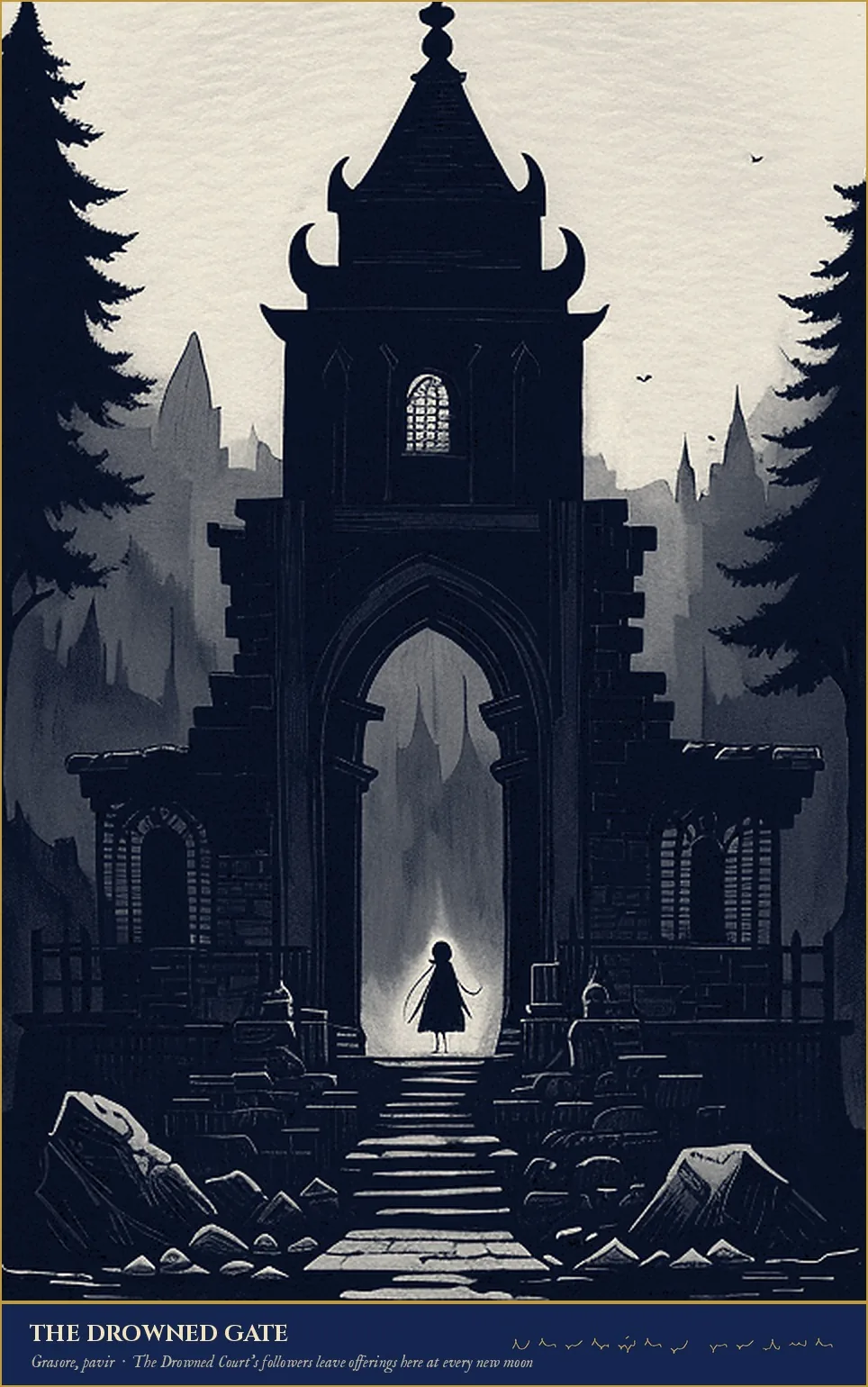
The sketchbook: crest, arms, landmark and heraldry sheets
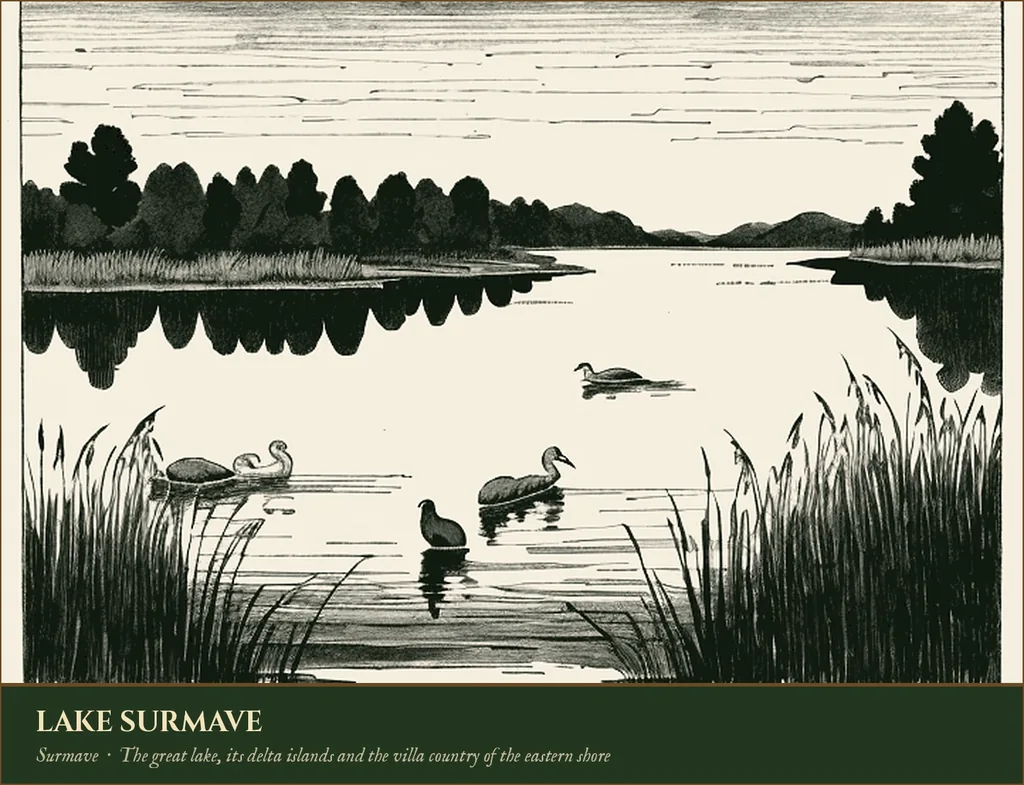
The Land
Provinces
The Solvaine Isles
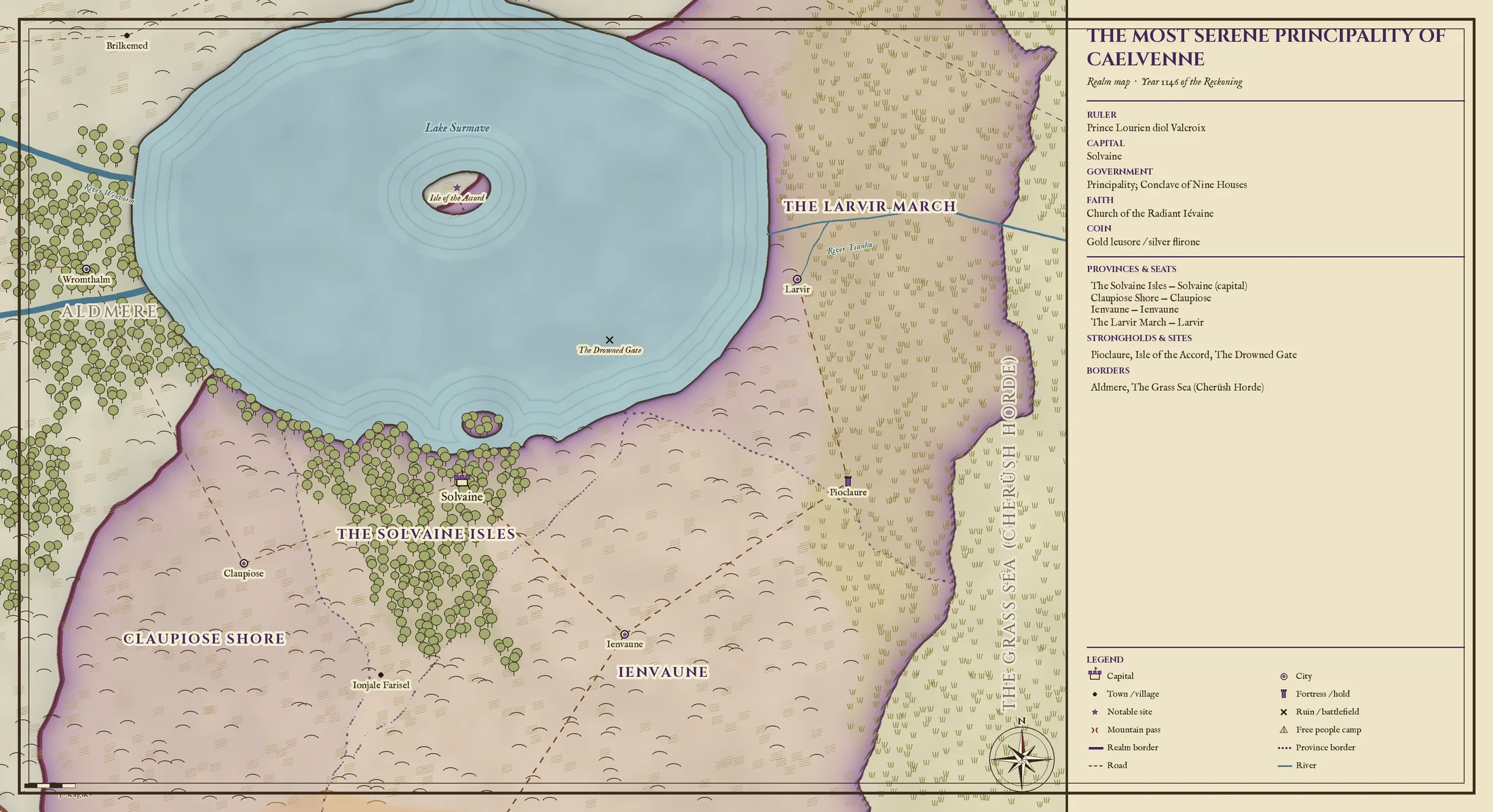
The capital province of Caelvenne, made up of Solvaine and the delta islands around it at the lake's southern end. It holds the Sun Cathedral, the counting-houses of the Nine Houses, and the glassworks canals where jewel-green glass-flies swarm.
Claupiose Shore
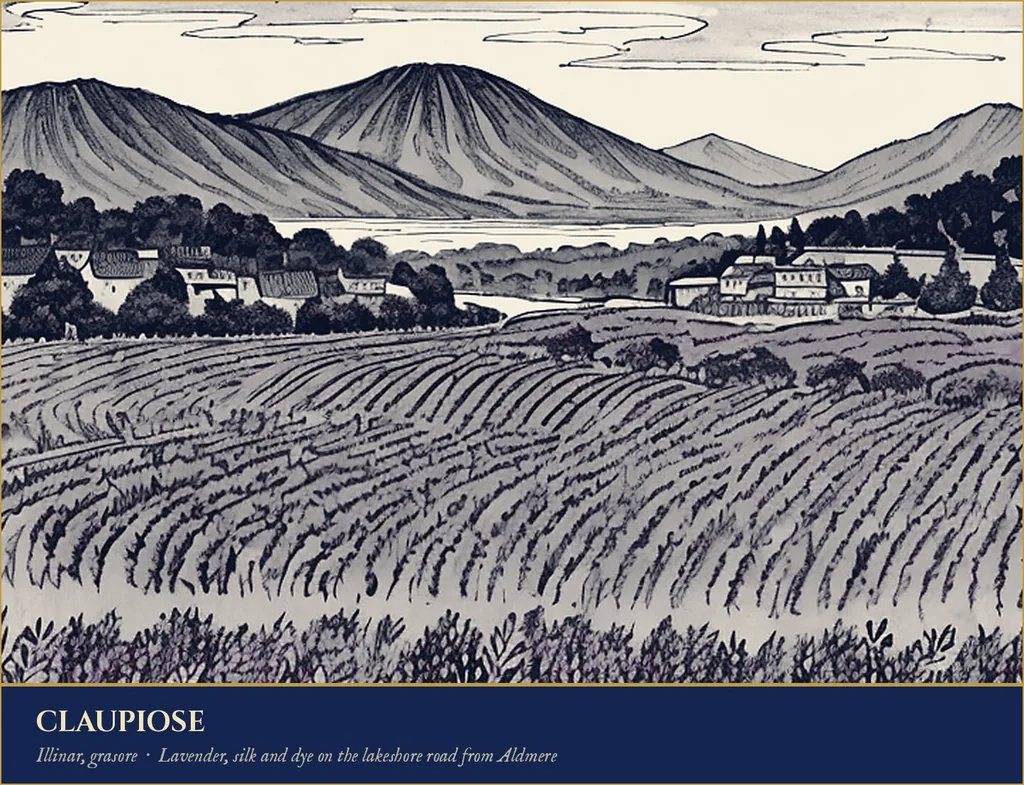
The southwestern province of Caelvenne, around the city of Claupiose, where the road from Hethlend and Wromthalm reaches Caelvennois ground. The hills above Claupiose are purple with shore lavender grown for the perfume trade, and Claupiose mulberry groves feed the silk-moths of the dye-houses.
Ienvaune (province)
The southeastern province of Caelvenne, around the city of Ienvaune: terraces of the Ienvaune vine, which gives Caelvenne its white wine, and villa gardens where the Ienvaune nightingale sings and fireflies light the vineyards on summer nights. The Nine Houses summer here to escape the midge swarms over Solvaine's canals.
The Larvir March
Caelvenne's northeastern frontier, at the corner where the River Tsanha leaves Lake Surmave and the Grass Sea begins. Its border with Aldmere was drawn after the War of the Tsanha Fords (911–914) and still stands, with Larvir on the Caelvennois side.
Voices of Caelvenneorlier
Prince Lourien diol Valcroix
Silver-haired, beautifully dressed, with a mild pleasant face that has never once shown what he was thinking. Wears a single gold ring shaped like a lily and no other jewelry, which in Solvaine is a boast. Has a slight lisp he turned into an affectation so people would underestimate him.
Bevele Bansine Farisel
Short, plump, dark-eyed, with a warm grandmother's face and an abacus mind. Dresses richly but not showily; her one vanity is scent, a rose perfume that announces her before she enters. Widowed young, raised four children and a bank.
Roltien Aijal
Thin, sallow, forgettable in a way he has cultivated for thirty years. Wears black and gray. A faint scar through his left eyebrow he claims came from a fall and which came from a knife.
Cardinal Fezaud Lalos
Vast, jowled, gold-robed, magnificent. Sings the dawn liturgy in a bass that fills the cathedral and eats a dinner afterward that would fill a barracks. Genuinely believes the Radiant Iévaine favors Caelvenne, and points to the gold as proof.
Sierelle Tésvol
Descendant of the Sierine Tésvol who built the first heliograph line. Small, quick, freckled, with lens-burns on her fingertips and a squint from years of staring into polished bronze. Wears men's work clothes and a tool belt in a city of silk.
Cities and Townsvolile
Solvaine
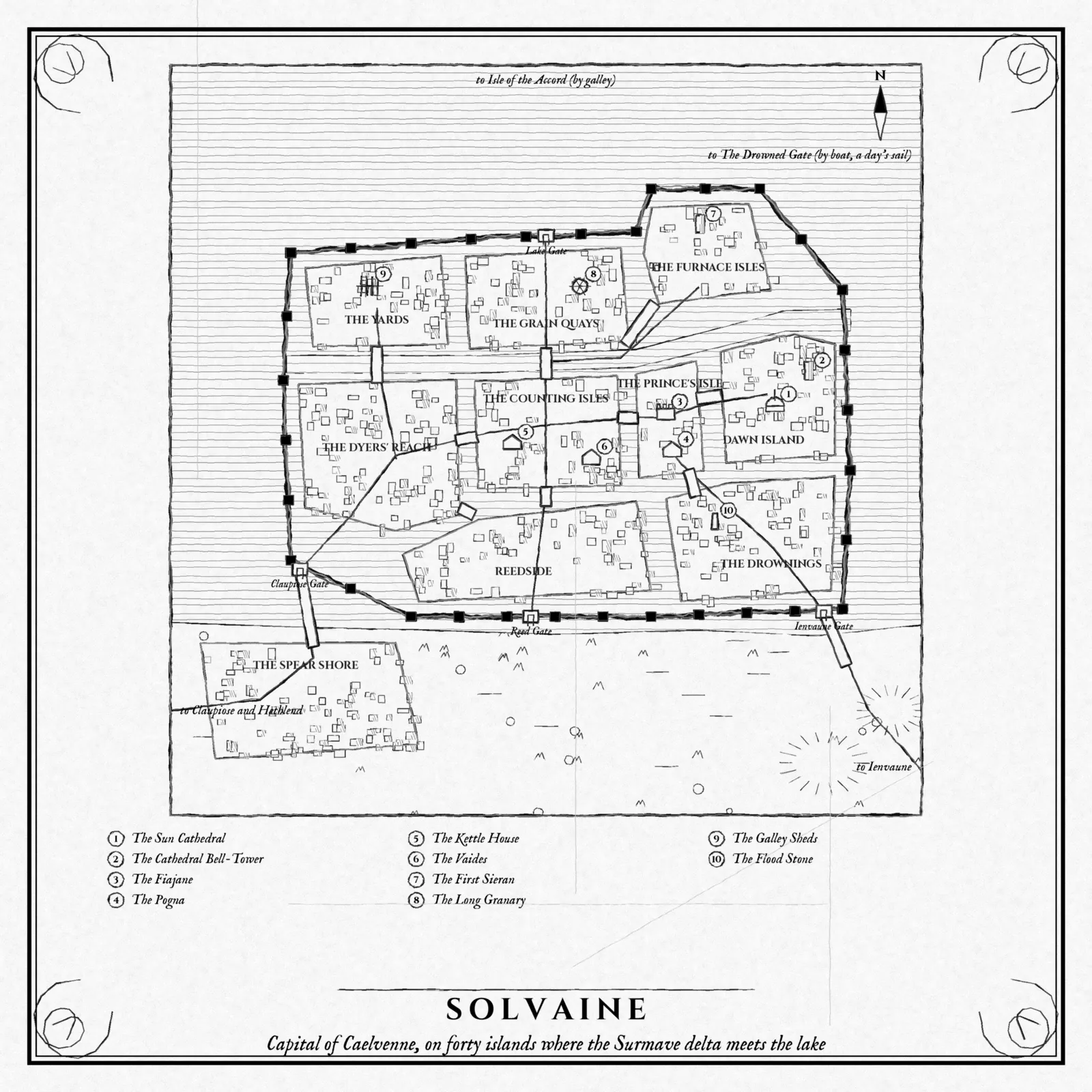
From Claupiose, the road runs out before the city begins. The last mile is a causeway of brick piers across the reed marsh, and from its crown at dawn the whole city rises out of the water at once: forty islands packed with painted walls, arcades and bell towers, the canals running between them in dark green lines, and over all of it the golden dome of the Sun Cathedral taking the first light off Lake Surmave. On the eastern islands a mirror tower answers the sun with a flash of its own. There is no thatch anywhere. Every roof is tile, and every wall is painted rose, ocher or lily white.
Claupiose
Coming from Aldmere, the first thing a traveler sees of Caelvenne is purple. The road from Wromthalm climbs over the last rise of the shore, and the hills above Claupiose are covered in shore lavender, row on row, with the mulberry groves dark green below and the lake flat and bright beyond. The city sits at the foot of the hills around its galley harbor, and its smell reaches the road before its walls do: lavender from the still-houses, and under it the sour steam of the dye vats. The customs men at the Land Gate speak Aldmeri to everyone, politely, and charge in leusores.
Other towns and strongholds: Ienvaune, Larvir, Ionjale Farisel, Pioclaure. Every town on the continent →
Great Houses and Armsgladéze
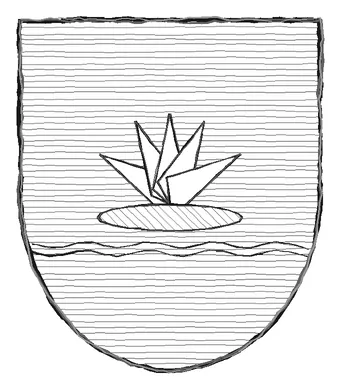
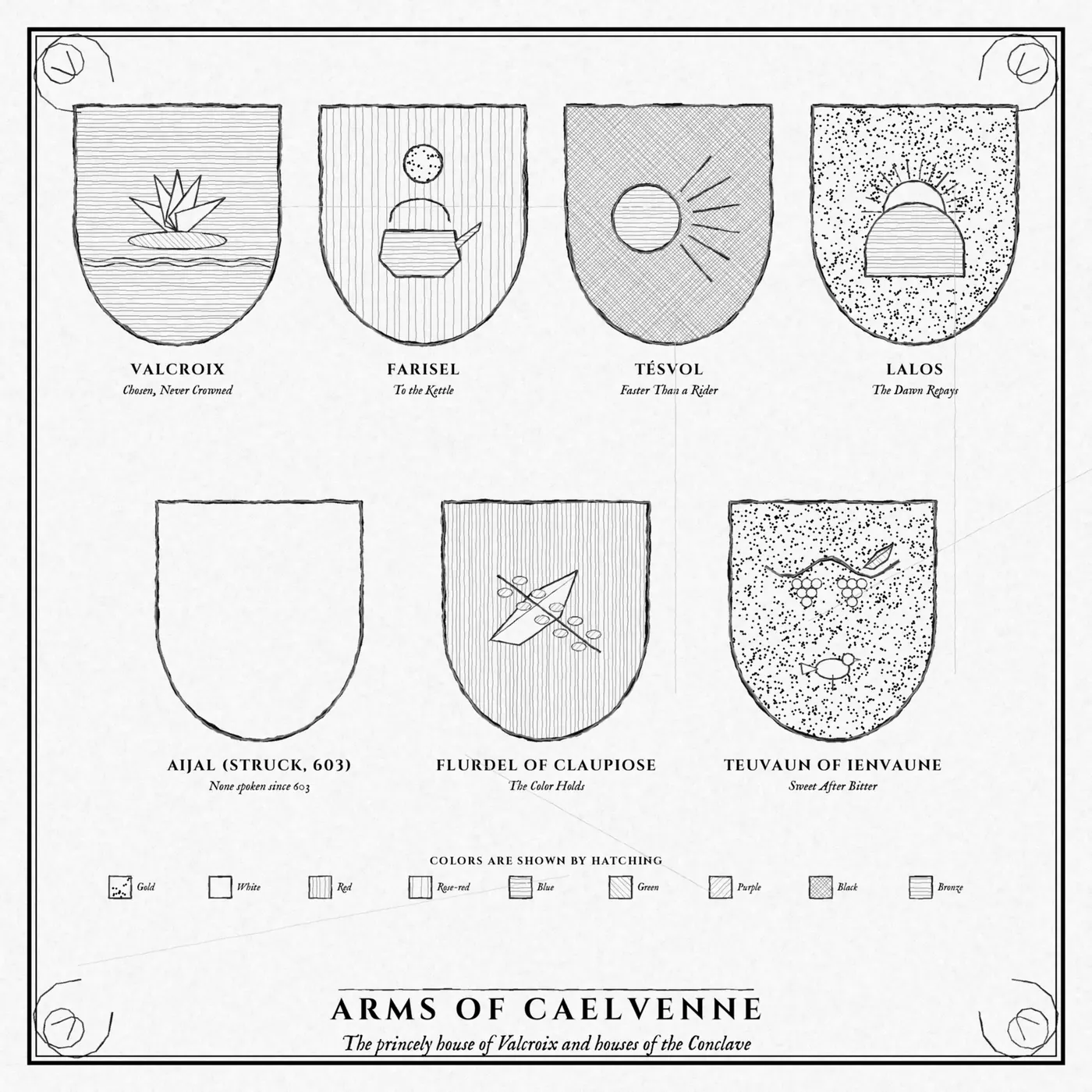
Valcroix
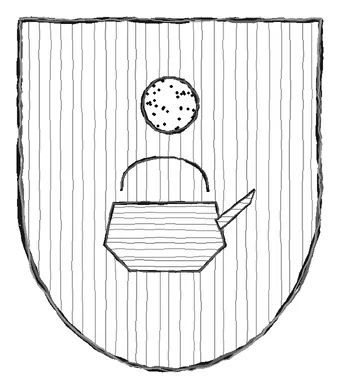
Farisel
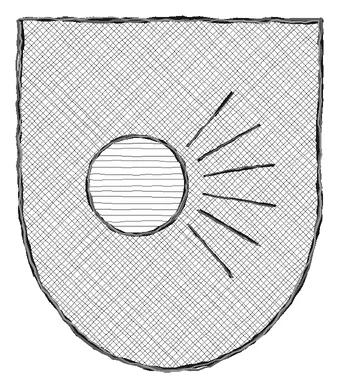
Tésvol
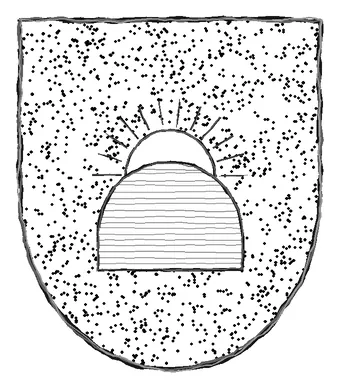
Lalos
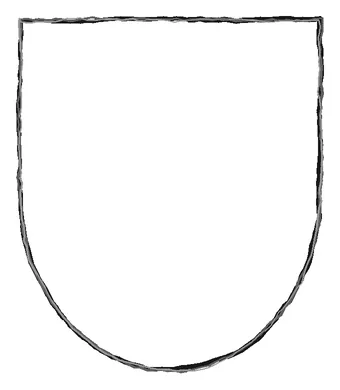
Aijal (struck, 603)
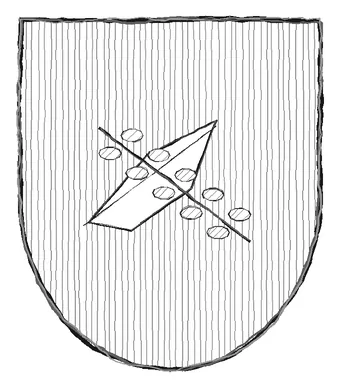
Flurdel of Claupiose
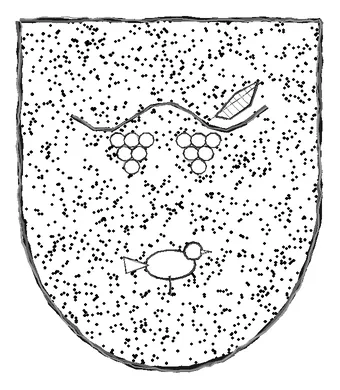
Teuvaun of Ienvaune
The houses in full: descent, heads, heirs, feuds
Succession law
The Conclave of Nine Houses elects the prince from among its families, and no house holds the seat by right. The Valcroix have held it most often. Headship of a great house goes to whichever member the house chooses, and Farisel was founded by a widow and has been led by widows. A commoner leaves his goods by a testament written in daylight, shared among sons and daughters alike unless it says otherwise. A debt passes to the debtor's heirs and, in the great families, to the house itself. A marriage among the houses is a contract, sealed at the Mirror Vow, where the house's secret mirror-name, its ètinvime, is spoken aloud. Claupiose houses do not marry Ienvaune houses.
The ruling house: Valcroix
text
Fezaud diol Valcroix, elected first Prince of Caelvenne, 294
│
⋮
├── Roltien diol Valcroix, prince; stabbed at dawn prayers, 603
⋮
├── Tilaud diol Valcroix, prince  ═══  Princess Glaidith Tulvard of Aldmere   (the Marriage of the Lake, 672)
⋮
├── Lourien diol Valcroix, born c. 1085, elected prince 1132
│
└── (a brother or sister of Lourien, unnamed)
     │
     └── Rorelle diol Valcroix, born c. 1118  ═══  Dobarmo IV deso Grarañe, King of Castavar   (1135)
          │
          └── two sons, unnamed
- Seat: The Fiajane on the Prince's Isle, Solvaine (
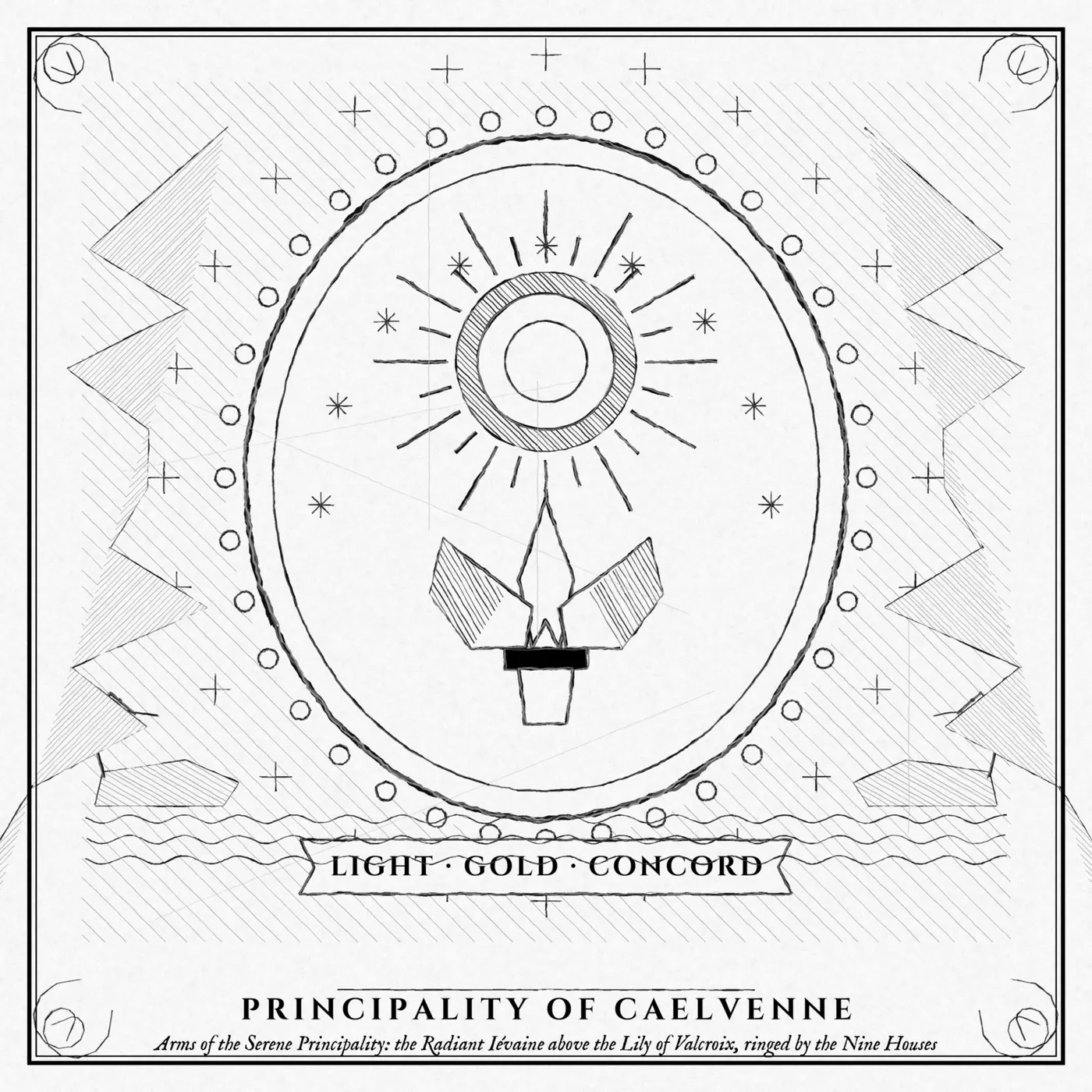
solvaine); the Solvaine Isles (the-solvaine-isles). - Arms: On deep blue, a white Solvaine water-lily, open, floating on a line of silver water. The same lily stands under the Radiant Iévaine on the realm's arms, ringed by nine stars for the Nine Houses.
- Words: Chosen, Never Crowned.
- Head: Prince Lourien diol Valcroix (61), who wears one gold ring shaped like a lily and no other jewelry.
- Heir: None by right. The next prince will be elected.
- Wealth and power: The house holds the prince's seat, the Lilies, the Fiajane's dining hall, and a niece on the throne of Castavar.
- Allies and feuds: Lourien is the Concord's perfect servant. The Lilyists, a small party of Valcroix clients, want the prince made hereditary. Lourien has never encouraged them and never discouraged them.
- History: The Peace of the Nine made Fezaud prince in 294. A priest in the pay of the House of Aijal stabbed Prince Roltien at dawn prayers in 603. Lourien was elected at 47 in 1132 and made the Gilded Pact in 1135.
- Hooks: A Valcroix keeper of pedigrees has found that the Marriage of the Lake may give the Valcroix a better claim to Vareth's throne than the Tulvards have. The pigeons from Grarañe have stopped coming. The Fiajane's kitchens have ordered seven courses for seven ambassadors.
- Direction: CONTESTED.
Farisel
- Seat: The Kettle House in the Counting Isles, Solvaine (
solvaine); the villa town of Ionjale Farisel (ionjale-farisel). - Arms: On rose-red, a plain copper kettle with one gold coin above it.
- Words: To the Kettle.
- Head: Bevele Bansine Farisel (49), who announces herself with rose perfume, and who has cut off Castavar's credit.
- Heir: Chosen by the house. She has four children, none named in the chronicles.
- Wealth and power: Farisel is the largest lender in the One Land. It holds Aldmere's 2,100,000 leusores, Castavar's 4,800,000, Clan Stormbrand's 40,000, and about 3,000,000 owed by four of the Nine Houses. Tevon of the Yards, senior captain of the lake navy's Yards at Solvaine, is a Farisel cousin.
- Allies and feuds: Farisel lives by the Ledgerites' creed in practice. Tésvol is bound to Farisel by marriage and debt. Every borrower resents her.
- History:
- 903 — The glass-merchant's widow Vailine Farisel founds the house by lending to Aldmere's crown when the older houses refuse. She lends her first kettle of coins at one in ten. The chronicles do not give the year Farisel took a door in the Pogna.
- 1068 — Farisel buys the failed House of Tésvol's debts, and Tésvol marries into it.
- 1135 — Farisel takes over Castavar's whole silver debt on new terms, in the week of the Gilded Pact.
- Hooks: A Kettle House clerk has died, and his private ledger is missing. A Farisel factor is on the Fur Trail to collect from Selra. Bansine's late husband was a Gatekeeper of the Drowned Court.
- Direction: CONTESTED.
Tésvol
- Seat: The First Sieran on the Furnace Isles, Solvaine (
solvaine). - Arms: On black, a round bronze mirror throwing six gold rays to the right.
- Words: Faster Than a Rider.
- Head: Not named. The house's best-known member is Sierelle Tésvol.
- Heir: Chosen by the house.
- Wealth and power: The house keeps its seat among the Nine only by marriage to Farisel. It also has the mirror towers, which are worth more than its bank ever was.
- Allies and feuds: The house is tied to Farisel. Sierelle is the Bench's unlikely darling, and the Concord finds that charming.
- History:
- 788 — Sierine Tésvol builds the first mirror tower line across the lake.
- 1068 — The Solvaine Bank Panic. Tésvol fails after lending to a Castavari silver venture, and survives among the Nine only by marrying into Farisel.
- Hooks: Someone has lent the cathedral's poor-fund at interest to a Tésvol, and that loan is keeping the family from ruin. Kaishon's ambassador and a Farisel cousin have each taken Sierelle to lunch three times this month.
- Direction: RISING, on mirrors instead of money.
Lalos
- Seat: A counting-house in the Counting Isles and a villa at Ienvaune (
solvaine,ienvaune). - Arms: On gold, a blue dome with a white sun-disc rising behind it.
- Words: The Dawn Repays.
- Head: Not named. Its best-known son is Cardinal Fezaud Lalos (66), prelate of the Sun Cathedral.
- Heir: Chosen by the house.
- Wealth and power: Cardinals and cathedral priests come from the Nine Houses, and the Lalos have given the Church its loudest voice. Through its cardinal the house takes bribes from the other eight, and through him it feeds the Bells too.
- Allies and feuds: The house stands with the Concord. Rislo Litoto's Berrode wants the cardinal burned.
- Hooks: The cardinal fought Prince Lourien for three years to keep the poor-fund from being lent at interest, and his own priest has lent it.
- Direction: STABLE.
Aijal
- Seat: None. The house lives on only as spies, and its master works from the Quiet Office, which by law has no address (
solvaine). - Arms: Struck from the Pogna in 603. Roltien Aijal bears no arms, and keeps a small painting of the bell-tower in his study instead. Aijal is the Caelvennois word for cipher.
- Words: None spoken since 603.
- Head: Roltien Aijal (44), master of the Quiet Office, last heir of the house.
- Heir: None.
- Wealth and power: The house has no money and no islands, but it has agents in every court on the continent, Tharxa included.
- Allies and feuds: Roltien is loyal to Caelvenne, and to the prince for as long as the prince is loyal to Caelvenne.
- History:
- 603 — A priest in the pay of the House of Aijal stabs Prince Roltien diol Valcroix. The Conclave hangs the Aijal patriarch and two of his sons from the cathedral bell-tower. The old wives say the bricked tenth door of the Pogna was Aijal's; the Bench says it is theirs.
- Hooks: The taverns still sing the bell-tower song, and it is bad luck to hum it near an Aijal. Three of his agents in Grarañe have gone quiet this year.
- Direction: STABLE, and ending with him.
Flurdel of Claupiose
- Seat: Claupiose (
claupiose), where the Conclave rules through the houses that hold the city's wards. - Arms: On red, a white mulberry leaf crossed with a purple sprig of lavender.
- Words: The Color Holds.
- Head: Bevele Claline, a widow in her fifties who holds the harbor wards of Claupiose.
- Heir: Chosen by the house. Her younger son is the bridegroom offered below.
- Wealth and power: Flurdel is a lesser house, not one of the Nine. It holds the Rèvascare and the Silk Lofts as wards and takes ward dues from the dye-houses.
- Allies and feuds: The house is Claupiose's pride. The Flurdel keep the Pitch Stair stone clean. Claupiose calls it a memorial, and Ienvaune calls it a boast.
- History:
- 271 — Claupiose's galleys burn Ienvaune's harbor. The Flurdel claim an ancestor loaded the pitch.
- Hooks: A match has been offered between a Flurdel son and a Teuvaun daughter, the first between the two cities since 271, and somebody has chipped the Pitch Stair stone.
- Direction: RISING.
Teuvaun of Ienvaune
- Seat: Ienvaune (
ienvaune). - Arms: On pale gold, a green vine branch with white grapes above a small silver nightingale.
- Words: Sweet After Bitter.
- Head: Lenvén the Vintner, head of the house, whose white wine goes to every table of the Nine.
- Heir: Chosen by the house.
- Wealth and power: Teuvaun is a lesser house, and host to the Nine every summer when the midges drive them out of Solvaine. Its bakeries make the pastries that sweeten Aldmere's Lord Chancellor.
- Allies and feuds: Ienvaune's grudge against Claupiose is 875 years old. Lenvén wants the match anyway, because the Wromthalm road runs through Claupiose.
- History:
- 271 — Two thousand die when Claupiose fires Ienvaune's harbor.
- Hooks: If the Flurdel match goes ahead, it will be the first Mirror Vow between the two cities in 875 years.
- Direction: STABLE.
The other houses of the Nine. Farisel, Valcroix, Tésvol and Lalos are four of the Nine. The other five are old banking and merchant families the chronicles do not name. Four of the Nine owe Farisel about 3,000,000 leusores among them. Each keeps a counting-house in the Counting Isles, holds islands as wards and has a door in the Pogna.
Caelvenne's houses are CONTESTED. They have never been richer. Their largest debtor has been cut off, and their army leaves when the Iron Contract lapses in 1147.
Faith, Myth and Folklorevaméval
Myths
The Sun's Debt. The Radiant Iévaine, in the first days, borrowed gold from the earth to make the dawn, and has been paying it back every morning since by pourin…
Myths
The Sun's Debt. The Radiant Iévaine, in the first days, borrowed gold from the earth to make the dawn, and has been paying it back every morning since by pouring light onto Lake Surmave. Solvaine's cathedral faces east so the debt can be witnessed. The Ledger faithful say the myth proves the Sun is a debtor like everyone else.
The Nine Sisters. The Peace of the Nine in 294 was, as the common people tell it, made by nine sisters whose fathers had fought the Marrowmere Wars. They met on the island in the lake, swore on a mirror, and each married one of their brothers' enemies. The Nine Houses are said to descend from them. Every house claims the eldest sister.
The Drowned City. The Builders of the Age of Ruins built a city so beautiful that the lake rose to keep it. On calm nights, the very old say, you can see the roofs. The Drowned Court says the Builders are asleep in it and dreaming Solvaine; if they wake, Solvaine ends.
Folk tales
The Glassblower's Daughter. A glassblower's daughter made a mirror so true that whoever looked into it saw what they owed.
Folk tales
The Glassblower's Daughter. A glassblower's daughter made a mirror so true that whoever looked into it saw what they owed. The prince of the day bought it and had it broken. The pieces became the first mirror towers, and that is why a heliograph never lies.
Farisel's Kettle. Vailine Farisel, founder of the House, is said to have made her first loan from a kettle of coins her husband left her, at one coin in ten, and to have counted the kettle every night until she died. The bankers' toast in Solvaine is "to the kettle."
The Lily That Would Not Wilt. A knight of the Lilies loved a Drowned Court fisher-girl and gave her a lily from his crest. She threw it in the lake, and it floated back every dawn for a year. How the tale ends depends on which house is telling it.
Old wives' tales
Old wives' tales
- Never lend on a day the cathedral dome is in cloud; the Sun is not watching the contract.
- A mirror tower flashing at night with no message means the Quiet Office has lost a man.
- If you find a leusore face-up in a canal, spend it before dusk or it spends you.
- Tie a knotted cord to the bow of any boat, or the Drowned will count you as one of theirs.
- A child born during the dawn liturgy will be rich and unhappy. A child born during the Bells will be poor and never alone.
- Do not hum the Aijal bell-tower song near an Aijal.
Traditions
Traditions
- First Light. In every Caelvennois household the eldest opens the eastern shutter at dawn and says, "The debt is paid." Then coffee, which comes from Zarvand at ruinous cost.
- The Mirror Vow. Marriages in Solvaine are sworn facing a mirror, not each other, so each sees what they are promising.
- Kettle Night. On the day Vailine Farisel died, the Nine Houses count their books by candlelight, in silence, and the youngest clerk reads the total aloud.
- Floating the Lily. Girls of the houses float a lily on the lake at sixteen. If it comes back, they will marry within the year. Half the houses keep a servant with a boat and a hook.
Law and Daily Lifemadéve
Courts, crimes, marriage, food, dress and a day in Caelvenne
Law
The Conclave of Nine Houses makes Caelvenne's law in the Pogna, with the prince presiding. Each house holds some islands and towns as its wards, keeps watchmen on them and settles small quarrels in its own counting-house. Quarrels between houses go to the Conclave. The Lilies guard the prince, the Tharaxi guard Solvaine's shore by day, and the Quiet Office watches everyone and answers to no court.
Caelvennois law is mostly the law of contracts (lounile). A contract signed after dark or under a clouded dome is void, and that has saved more than one debtor. Interest falls due on the four Settling Days, the 1st of Punsimor, Clauve, Caudés and Jende, and the books close on Closing Day, the 30th of Gresil. Every merchant must be entered in the nélognel, the trade register. To be struck from it is how Caelvenne makes an outlaw: a struck man may not sign a contract, and nobody will buy from a man who cannot.
| Crime | Usual punishment |
|---|---|
| Theft | Pay back twice what was taken |
| Boat theft | Pay back twice, and a season rowing a house's barge |
| Clipping coin | A flogging on the quay, and the clippings forfeit |
| Smuggling past the customs | The goods forfeit to the ward's house |
| Signing a contract in the dark | The contract is void, and the party who asked for it pays the other's costs |
| Forging the leusore | Drowned in the harbor with the coins sewn into the coat |
| Murder | Hanging, from the ward's gallows or, for a great crime, the bell-tower |
| Heresy | Nothing, if it pays its tithe |
Debt. A debtor who cannot pay goes to the Debtors' Hulks, two old galleys moored off the Yards, and sits there until his family pays. Their book is kept by Miqui the Hulk-Clerk (miqui, "honest"), a Ledger-follower who lets families visit on Gresil and has never lost a name. A debt passes to the debtor's heirs and, among the great families, to the house. That is how the House of Tésvol came to be married into Farisel after the Panic of 1068.
Family
Marriage and divorce. A marriage among the houses begins as a contract, the dowry written in ledger figures and signed at noon. Girls of the houses float a lily on the lake at sixteen, and if it comes back they will marry within the year. At the Mirror Vow the couple face a mirror rather than each other, and only then is the house's secret mirror-name, its ètinvime, spoken aloud. Claupiose houses do not marry Ienvaune houses. The Church does not undo a marriage, but the Conclave's clerks will cancel the contract when both houses agree and the dowry is returned. The cardinals call it a separation. The houses call it a settlement.
Inheritance. Commoners leave their goods by a testament written in daylight, divided among sons and daughters alike unless it says otherwise. Headship of a great house goes to whichever member the house chooses, and Farisel has been founded and led by widows. The prince is elected, and no Valcroix has held the seat by right.
Women. Caelvenne's women run banks, reel silk, dive for the Drowned Court and build mirror towers. The Church's high offices go to men of the houses, so the women have found other roads to power.
Who is not free. No one in Caelvenne is owned. The poor of Solvaine are free to go hungry, and when they do they ring the cathedral bells.
Children and schooling. About four in ten Solvainers can read, and perhaps one villager in seven. Guild schools teach the trades, the cathedral school on Dawn Island teaches the Cathedral Hand, and the houses hire tutors in languages, law, ciphers and the ledger figures. A Solvaine child is likely to learn her letters from a printed bill of exchange.
Daily life
Food and drink. Caelvenne grows almost nothing it eats. Its bread is Aldmere wheat, and when the grain is late, the price chalked at the Grain Stair rises before anything else does.
| A banker of the Nine Houses | A Furnace Isles glassblower | A vineyard hand at Ienvaune | |
|---|---|---|---|
| Morning | Zarvani coffee and an Ienvaune pastry after First Light | Bread, and coffee on a Settling Day | Bread and watered white wine |
| Midday | A long lunch in the arcades: whitefish, delta eel, Tsanha sturgeon roe, Ienvaune white | Bread, perch or eels from a canal stall, wine | Bread, cheese, onions, wine |
| Evening | Mirror pike, villa fruit, cacao from the Verdant Deep; lake sturgeon and mirror swan only at the prince's table | Whitefish stew, bread, Castavari red if the week was good | Bean soup, bread, wine |
Dress and houses. Anyone who can manage it wears silk dyed red, blue or saffron. Men and women alike wear scent, and the poor wear linen and old silk turned twice. Solvaine's houses are tall, narrow and painted, with a water door below and a land door on the walkway, and nobody sleeps on a ground floor that floods every wet spring. Every roof is tile.
Health and hygiene. Nobody drinks the canals. Water comes from rain cisterns under the squares and from springs in the villa hills, carried in by boat. The houses heat bath-rooms from their kitchens, and the poor wash in ward bath-houses the houses pay for, so that the Bells stay clean and quiet. Physicians are bought from Zarvand. The lens-grinders of the Furnace Isles make reading spectacles, and Aldmere's Lord Chancellor wears a pair on a chain. Lavender and villa-rose water wash the sickrooms. In bad summers the delta mosquito brings the lake fever to Reedside first.
Birth and death. A child born during the dawn liturgy will be rich and unhappy. One born during the Bells will be poor and never alone. Children are named at a dawn service facing east. The dead are rowed at dawn out the Reed Gate to the Dawn Fields, the burial grounds on the mainland beyond the marsh, so that the Sun sees them go. Drowned Court families give their dead to the lake at the new moon, with a knotted cord tied at the ankle.
Pastimes. Galley crews race on the Pavir after each Settling Day, and the whole city bets on them. Caelvenne has choirs, composers, painters, the Lantern Road's players, and a tavern song that must not be hummed near an Aijal.
A day. At dawn the eldest opens the eastern shutter and says, "The debt is paid," and coffee follows for those who can pay for it. The counting-houses open at full light, do business over long lunches and close at dusk. The week runs six days, from Siale to Gresil, when the banks close.
Where it is going: CONTESTED. Caelvennois law is the most exact on Aethorra, and the most one-sided. It protects the lender, and in 1146 its largest borrowers are running out of ways to pay. A law of contracts holds only while both parties want the contract to go on.
Trade, taxes and money
Makes and sells. Credit first. Then mirrors, glass and lenses, dyed silk, perfume, Ienvaune white, printing, clockwork weapons, jewelry and painting.
Buys. Aldmere grain, which is most of what it eats; Castavari red; coffee "at ruinous cost"; furs; sturgeon roe; pepper, saffron and cacao; Kaishoni silk; and Tharaxi spears.
Taxes and tolls. - The Land Gate twentieth at Claupiose and the Lake Gate twentieth at Solvaine: one part in twenty of the worth of everything that comes in, save Compact grain. Ienvaune and Larvir take the same at their gates. - The Silk Hall's fifth: one part in five laid on eastern silk, won by the Claupiose reelers in 1119. - A lake toll on every foreign hull on the Mirror, one flirone for each ton it can carry, taken at Solvaine and Larvir. The Drift has never paid it. - Ward dues: each house charges the islands it holds a flirone a month for each house and a leusore a year for each shop, for watchmen and lamps. - The Vaides' charge of one part in forty for striking coin. Indulgences and tithes go to the Church, not the state.
Direction. CONTESTED. Caelvenne has never been richer on paper, and nearly all of that paper is owed by people under strain.
The Year in Caelvennesareme
Months. Punsimor (dawn), Fiajane (lily), Illinar (silk), Clauve (sun), Dédint (shore), Ienaune (vineyard), Caudés (wine), Surmave (mirror), Vailal (glass), Jende (star), Grasore (lake), Gresil (ledger), the month when every book on the lake is balanced.
Week. Six days, so each 30-day month holds five weeks exactly and every date falls on the same weekday every year: Siale, Bove, Fiane, Glaure, Saive (one to five) and Gresil (ledger), when the banks close and the books are balanced. The Accord Days belong to no week. Every other calendar on the continent must be turned into this one before a Caelvennois contract is signed.
Years. The Reckoning. Caelvenne kept the Accord's own copy of it, and its clerks draw up the tables every other realm converts by.
Festivals:
- The Settling Days (1st of Punsimor, Clauve, Caudés and Jende). The four quarter days, when interest falls due. The first of them, on New Year's Day, is also the day Caelvenne pays Tharax the year's gold under the Iron Contract.
- The Radiant's Sermon (3rd of Clauve, the longest day). Every cathedral of Iévaine preaches against the Ledger. The Nine Houses attend. Their bookkeepers do not.
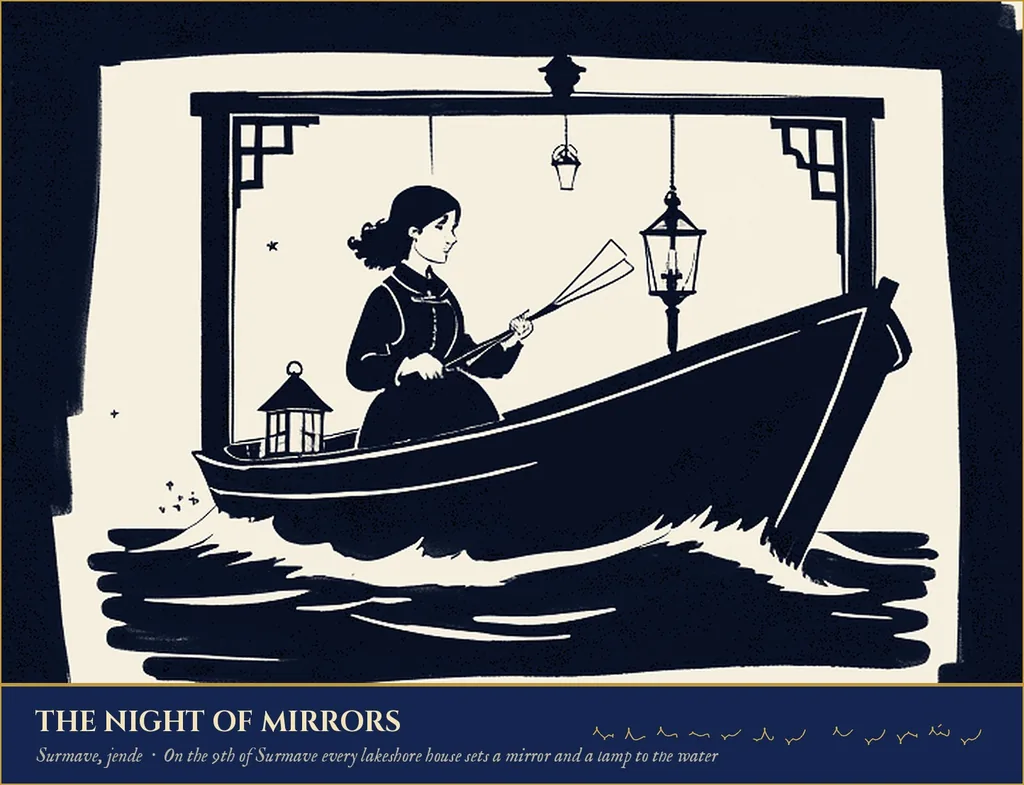
- The Night of Mirrors (9th of Surmave). The day of the Peace of the Nine in 294, when, as the common people tell it, nine sisters swore on a mirror on the Isle of the Accord. Every house on the lake shore sets a mirror and a lamp in a window facing the water, and from a boat on the lake the whole shore burns twice.
- Closing Day (30th of Gresil). The year's books close. A debt not settled by sundown is carried over, and in the Accord Days that follow no one may call it in.
- The new moon. Those who follow the Drowned Court leave offerings at the Drowned Gate every new moon, in whatever month it falls.
Speak Caelvennoisdosnassir
| Caelvennois | English |
|---|---|
| Lourté nervile. | Hello. (Literally "light good": good light. The adjective follows the noun.) |
| Lio fonquiver lémellève. | The debt is paid. (Said at dawn, opening the eastern shutter.) |
| Quame flant? | How much? (The Caelvennois greeting, some say.) |
| Jio bulrime vaul. | I don't know. (Rarely true in Solvaine.) |
| Vaume lolloun. | You owe. (The bank's whole vocabulary.) |
| Quar félient lio pendal? | Where is the bridge? |
| Vra farilsén, vaul vra davélor. | It's a loan, not a gift. |
| Liole liau surmave! | To the mirror! (A toast, and a vow. Also the farewell.) |
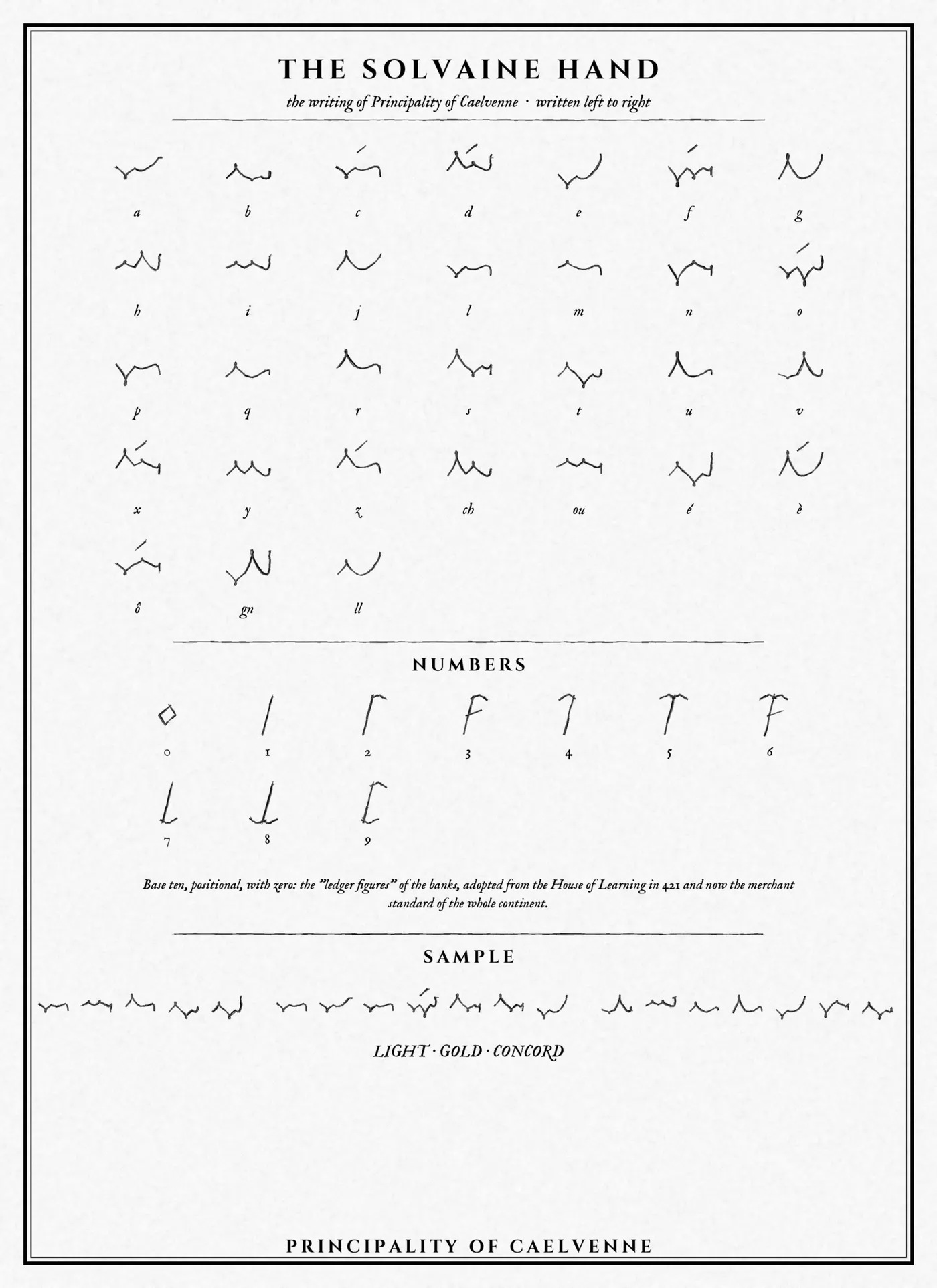
| Lourté, lalosse, viquent. | Light, gold, concord. (The motto.) |
| Liau iévaine feran eul. | The Sun sees it. (Said when a contract is signed, or a lie told.) |
| Nount lémellève. Nount lémellanne. | We paid. We will pay. |
| Prechal vaume teunribér? | Do you have bread? (Verb before the "you" in a yes-or-no question.) |
| Lio piosin diol lio valmaur | The prince's palace. ("Of" is diol; the owner comes last.) |
| Lioz pavirz diol Solvaine | The canals of Solvaine. (Plural -z is silent; you hear it in lioz / liauz.) |
| Caelvennois | English |
|---|---|
| trirvo | person |
| tachis | father |
| lodorrone | husband |
| lélare | king |
| vorlochi | farmer |
| clauve | sun |
| lènma | wind |
| grasore | lake |
| plelore | wood (material) |
| fojar | town |
| dirin | door |
| tumauve | day |
| sorlidén | spring |
| teunribér | bread |
| caudés | wine |
| vanil | dog |
| birrénras | bird |
A Thousand Yearsnavir
| Year | What happened |
|---|---|
| 0 R. | The Accord of Surmave. The six surviving great powers and the Tharaxi sign the Accord on an island in Lake Surmave, fixing borders and founding the calendar: Vareth, Wessary, the Marrowmere League, the Twin Crowns of Castavar and Lasdara, the Sarvani Khaasarate, the Three Thrones of the East, and Tharax. Hrodvald sends no envoy and signs nothing. |
| 220 R. | The Lake Treasury. The Marrowmere League cities of Solvaine, Claupiose and Ienvaune form a joint bank, the Lake Treasury, to fund their galley fleet. This is the seed of Caelvenne's financial power. |
| 255 R. | The Marrowmere Wars begin. The Marrowmere Wars begin. The League cities fight each other over lake tolls for forty years, hiring Hrodvald raiders, Tharaxi spears and Castavari knights by turns. |
| 271 R. | The Burning of Ienvaune. The Burning of Ienvaune. Claupiose's galleys fire Ienvaune's harbor with pitch. Two thousand die. The event is still a grudge between the two cities' noble houses. |
| 294 R. | The Peace of the Nine. The Peace of the Nine. Nine noble houses of the League end the Marrowmere Wars by dividing lake trade among themselves and electing a Prince to keep the peace: Prince Fezaud diol Valcroix. The state is renamed Caelvenne. The Conclave of Nine Houses dates from this treaty. |
| 367 R. | The Lake Comet. The Lake Comet. A comet hangs over Lake Surmave for forty nights. Sun-priests of Caelvenne declare it a sign of the Radiant Iévaine's favor. The Berrode of Castavar declares it a warning. Both build cathedrals. |
| 421 R. | The first leusore. Caelvenne mints the first leusore. Within fifty years it is the reference coin of the continent. |
| 511 R. | The Grain Compact. Aldmere and Caelvenne sign the Grain Compact: Aldmere feeds Caelvenne, Caelvenne lends to Aldmere. The Aldmere crown's debt to Caelvenne begins here and has never been paid off. |
| 539 R. | The Great Surmave Flood. The Great Surmave Flood. A wet spring and a Spine snowmelt raise Lake Surmave by twelve feet. Solvaine's lower city drowns. The Drowned Gate, a stone arch from the Age of Ruins, is uncovered by the receding water and gives the ruin its name. |
| 603 R. | The Assassination at the Sun Cathedral. The Assassination at the Sun Cathedral. Prince Roltien diol Valcroix of Caelvenne is stabbed at dawn prayers by a priest in the pay of the House of Aijal. The Conclave hangs the Aijal patriarch and two of his sons from the cathedral bell-tower. The House of Aijal survives only as spies; Roltien Aijal of the Quiet Office is its heir. |
| 626–627 R. | The Rice March. The Rice March. In the Hunger Wars, General Dezau Kyarau leads thirty thousand conscripts out of the Jade Gate to escort Kaishon's rice convoys west and collect Caelvenne's silver. At the Tontanor fords, on the League's Day of the Accord Days, his repeating crossbows kill some three thousand Aldmeri levies and Caelvennois marines who had been taking the rice; that night the steppe tribes take it. Kyarau marches home in 627 with the silver, the only Kaishoni army to stand west of the Rampart since the Emptying. In the same season the Zarvani burn a Castavari column with naphtha on the salest channels below Kebidaan, the first Talodin fire. |
| 631 R. | The Peace of the Isle. The Peace of the Isle ends the Hunger Wars. The envoys of the six signer-realms meet on the Isle of the Accord in the Accord Days, the first time since 0 R. Five terms: a signer whose army crosses a border in the Accord Days loses its chair at the Isle for seven years, and Kaishon sits out the first penalty; no realm's soldiers may seize a Qaflan wheel or a Drift keel, the Road Terms; each signer sends an envoy every year to hear the Accord read, the seed of the Sitting; grain in transit is not spoil; and a price is not an act of war. Hrodvald is not asked. |
| 672 R. | The Marriage of the Lake. The Marriage of the Lake. Prince Tilaud diol Valcroix marries Princess Glaidith Tulvard of Aldmere. The Valcroix line has Aldmere royal blood from this point, and Caelvenne has never let Aldmere forget it. |
| 741 R. | King Phospor Deneskid arrested. Tharax's King Phospor Deneskid is arrested by the Skekar for accepting Caelvennois gold and dies in prison. The first Tharaxi king removed by the Skekar, and the origin of the Phymun saying: "Gold has a smell." |
| 758 R. | The marriage of Gold and Silver. Infanta Marnada deso Grarañe, daughter of King Chanuo II of Castavar, marries Vorvaud diol Valcroix of Caelvenne, with the first Rislo's leave ever given for a foreign match. Castavar's new Puesdro silver is changed on Coin Row and minted through Solvaine's changers from this year; by 890 Castavar owes Caelvenne's old houses most of the ransom of 868. |
| 788 R. | The Mirror Towers. The Mirror Towers. Caelvenne's engineer Sierine Tésvol builds the first heliograph line across Lake Surmave. Within twenty years Solvaine can send a message to Larvir faster than a rider can saddle. |
| 801 R. | The Black Autumn. The Black Autumn. A blight destroys the Heartlands wheat crop. Aldmere borrows a fortune from Caelvenne to buy Kaishoni rice. The Grain Compact debt doubles. |
| 822–829 R. | The Lords' War. The Lords' War. The great lords of Aldmere's Westmarch, led by Duke Yornbael Durift, rebel against King Hethminth III over the Moot's right to tax them. The king wins, barely, with Tharaxi mercenaries paid in Caelvennois gold. The Durifts keep their duchy; the Moot keeps its taxes. The Westmarch has distrusted Hethlend ever since. |
| 892–899 R. | The Ledger War. The Ledger War. After a rotted harvest, Aldmere's Moot halves the Compact measure for 891; the Conclave calls it a breach and seizes forty grain barges and the Drift town of Threeoars at the Wenvorm mouth (the Seizure on the Mirror). Caelvenne's old houses pay Castavar's King Gaduo I to march on Zarvand for the ransom silver of 868. Aldmere, Zarvand and Tharax swear the Compact of Wrunvos in the Seventh Month: no separate peace, Aldmere grain down the Tharax road, Zarvani horse to the lake, the Gap closed to Castavar, and Tharaxi spears paid in twenty years of grain, not gold. Castavar calls it no war, because the Rislo will not call it a crusade. |
| 895 R. | The Battle of the Darthir. The Battle of the Darthir. Caelvenne's galleys land the Lilies, four hundred Castavari knights and two thousand hired Hrodvald crews below Wromthalm to take the Toll House. Kraxor Deneskid's Phymun meet them on the shingle in silence, and three thousand Zarvani horse archers under Khusjiraad shoot the Lilies' horses in the harbor shallows. The Lilies break, the Hrodvald reach the galleys, the Castavari knights are ransomed at fifty larrama a head. Caelvenne holds the water and never lands on it again. |
| 897 R. | The Thalmirn Boats. Aldmere tries the lake once. Forty lakeshore boats with bolt-throwers, built through the winter by the Northmere lords to break the blockade of the Wenvorm mouth, are reported by the mirror towers the morning they are launched and burned at their moorings that evening by the Claupiose and Solvaine squadrons. Aldmere has not built a warship since. |
| 899 R. | The Ledger Peace. The Ledger Peace, sworn on the Isle of the Accord in the Accord Days after a year of Qaflan wheel-letters, with Kaishon's ambassador as go-between. The Grain Compact is restored word for word and the measure is to be set each New Year's Day by Moot and Conclave together; the barges of 892 are paid at the Compact price and the Drift paid a leusore a keel for Threeoars; Castavar's chair at the Isle, empty since 895 for crossing into Daalher on the Khaasar's Day of 894, stays empty to 901 and Castavar swears the Peace standing and gets nothing else; Zarvand keeps Daalher and doubles its gate; Tharax takes its twenty years of grain and resolves never to be paid in gold, a resolution kept until 1131; and the Qaflan and the Drift are given a bench in the Sitting's hall to swear the Road Terms on, which becomes the Bench of the free peoples. Princess Somith Tulvard marries Prince Corenvo of Castavar to seal it. The sentence assigning the banks of the Tsanha fords is written badly, and the War of the Tsanha Fords is fought over it in 911. |
| 903 R. | The House of Farisel founded. The House of Farisel is founded in Solvaine by a glass-merchant's widow, Vailine Farisel, who lends to Aldmere's crown when the older houses refuse. Within a century Farisel holds the debts of half the continent. |
| 911–914 R. | The War of the Tsanha Fords. The War of the Tsanha Fords. Aldmere and Caelvenne fight a short war over who controls the crossing where the Tsanha leaves Lake Surmave. Caelvenne wins on the water and loses on land. The border is drawn where it still stands, with Larvir on the Caelvennois side. |
| 949 R. | Tharaxi spears on the lake shore. Caelvenne's Conclave formally adopts the practice of hiring Tharaxi spears for lake-shore garrison duty. Tharax accepts, on the condition that no Phymon ever sleep inside Solvaine's walls. |
| 1068 R. | The Solvaine Bank Panic. The Solvaine Bank Panic. The House of Tésvol fails after lending to a Castavari silver venture that collapses. Farisel buys its debts at a discount. Tésvol survives as one of the Nine only by marrying into Farisel. |
| 1097 R. | The Northmere stones. The Aldmere and Caelvennois envoys of the Sitting walk the dried marsh east of Thalmirn, where the border of 914 had been drawn through water, and set boundary stones with a rope. Both sides say the other cheated by a pace. The stones stand where they were set. |
| 1113 R. | "A town is not a hull". At the Sitting, Aldmere's envoy moves, to annoy Caelvenne, that the Drift's barge-towns be freed of the lake toll they have never paid, on the ground that a town is not a hull. Caelvenne accepts rather than enter the Drift as a people who can be taxed and therefore treated with. The nine words are the one thing the Sitting has settled in fifty years, and the reason Threeoars drifts between two realms and pays neither. |
| 1121 R. | Hethlarn III crowned. Hethlarn Tulvard III is crowned in Hethlend at 27 after his father dies of a fever. He inherits a treasury owing two generations of debt to Farisel. |
| 1131 R. | The Iron Contract. The Iron Contract. Caelvenne, unable to trust its mercenaries after a Castavari company defects mid-siege in a lake-shore raid, signs a treaty with Tharax: gold every year, a Tharaxi army in return. King Kenithor signs it. King Lekakor votes against it in the Thirty and loses by two votes. |
| 1132 R. | Lourien elected Prince. Lourien diol Valcroix is elected Prince of Caelvenne at 47. |
| 1135 R. | The Gilded Pact. The Gilded Pact. Prince Lourien's niece Rorelle marries Crown Prince Dobarmo of Castavar. Farisel refinances Castavar's entire silver debt in the same week. |
| 1139 R. | The Third Crusade. The Third Crusade. Dobarmo IV, urged by Litoto and funded by Farisel, marches 35,000 through the Tharaxi Gap under safe-conduct and down the Talodin. The Zarvani meet them at the Battle of Faashab-Talodin and break the ratorlon with Talodin fire at a river crossing. Eight thousand Castavari burn or drown. Dobarmo escapes. Castavar's debt to Caelvenne doubles. |
| 1145 R. | The saddle on the Bench. In the Accord Days that close 1145, Sarsak Tolmar sends a rider, Kholab, to the Sitting at the Isle, the first Cherüsh envoy in six centuries. Kholab refuses the Bench and demands a chair as the Charnazin's heir; the Sitting refuses, since the Charnazin never signed the Accord. He leaves his saddle on the Bench and rides for the fords. The same Sitting hears the Khaasar's letter of 1137 read into the record without reply from Tharax, the bishop's sermon on the Fourth Crusade, and Selra Stormbrand's letter asking for the Absent Chair, answered as always. Nothing is settled. |
| 1146 R. | Now. Now. Sarsak Tolmar's riders are seen at the Tsanha fords. Litoto preaches the Fourth Crusade in every cathedral in Castavar. Farisel has stopped lending to Castavar. Prince Hethbael of Aldmere has asked his father, in front of the Moot, why Aldmere still pays interest on a loan made in 511. |
Dispatchespanralire
From 1 January 2027 the Reckoning runs day by day, and news from Caelvenne arrives here as it happens: who rode where, who fell, who lied at council.